Basement
Basement waterproofing in Roswell
On a sloped lot the uphill basement wall holds back wet soil every time it rains. Interior waterproofing accepts that some water will get through and gives it a controlled way out.
You talk with an independent local waterproofing company. Roswell Crawl Space is a referral service and does none of the work itself.
What shows up first
A dark, damp line on the slab along one wall after a day of steady rain. Carpet that is wet at the edge and dry in the middle. Baseboards that swell, paint that blisters low on the wall, a tack strip that rusts. The wet side is nearly always the one with the most soil against it.
A single wet spot higher up the wall is a different problem. See basement leak repair.
The system
How an interior drain works
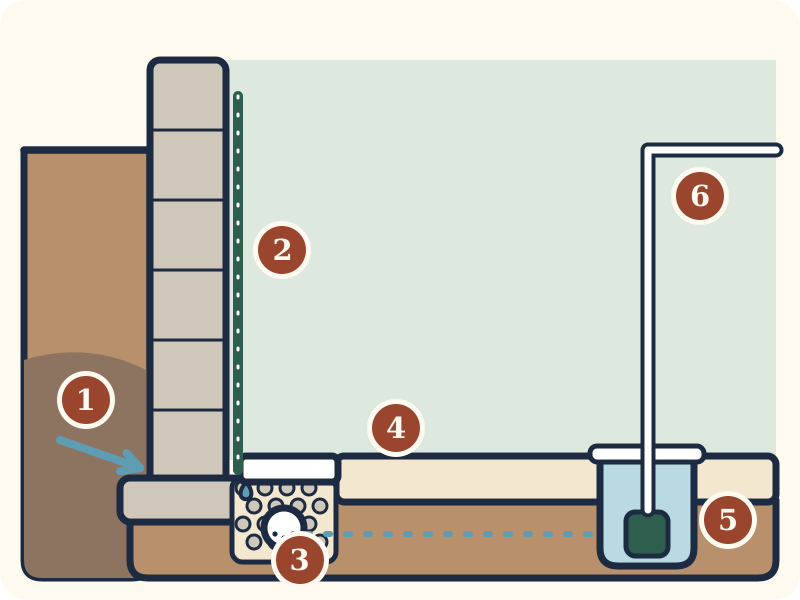
- Water at the joint. Soaked soil pushes water in where the wall sits on the footing.
- Wall membrane. A sheet on the inside face steers seepage down behind it, out of the room.
- Pipe in stone. A perforated pipe lies in washed gravel in a channel cut along the slab edge.
- New concrete. The channel is closed over so the floor is whole again.
- Basin and pump. The pipe empties into a basin where a pump waits.
- Discharge. The pump sends the water outdoors, away from the house.
What it does to a finished basement
The channel is cut with a concrete saw and a breaker. That is loud and dusty work for a day or two, and the broken concrete leaves in buckets through your house or a basement door.
On a finished wall, the lower part of the drywall and the framing plate usually have to come off so the crew can reach the slab edge. Flooring is lifted along the same strip. Ask who puts these back. Many waterproofing companies stop at the concrete patch.
Furniture and stored boxes need to move well clear of the walls being worked on. Plan for the room to be out of use until the patch has cured.
Sealers, paints and what they can do
Masonry paint sold as waterproof resists dampness. It does not resist water under pressure. When the soil outside is full, water lifts the coating off in sheets and the wall looks worse than before.
A drain works the other way. It lowers the pressure by giving water somewhere easier to go. The wall itself still gets wet from outside. If you want the wall kept dry, that is exterior waterproofing, and it means digging.
Ask the company
- Which walls get the drain, and why not the others?
- Where will the basin sit, and where does the discharge leave the house?
- What happens to the system in a power cut?
- Who removes and replaces drywall, framing and flooring?
- How is dust kept out of the upstairs rooms and the furnace?
- What does the written warranty cover: the pump, the drain, a dry floor? Who honors it if the company is sold?
Basement waterproofing questions
Inside or outside: which is right?
Inside systems leave the yard alone and handle water at the wall-floor joint well. Outside work keeps the wall dry and suits leaks high on the wall. Many houses only need one.
Can the drain go in without tearing out my finished walls?
Sometimes the lower strip is all that comes off. It depends on how the wall was framed. Ask to see where the cut lines will be before you agree.
Will this stop the musty smell?
It removes the liquid water. Humidity is a separate matter, usually handled with a dehumidifier.