Pumps
Sump pump installation in Roswell
A sump pump is the one moving part in most waterproofing systems. It sits in a basin at the low point, waits for water and sends it outside. The storm that fills the basin is often the storm that cuts the power, which is why the backup matters as much as the pump.
You talk with an independent local waterproofing company. Roswell Crawl Space is a referral service and does none of the work itself.
The parts, and what each one does
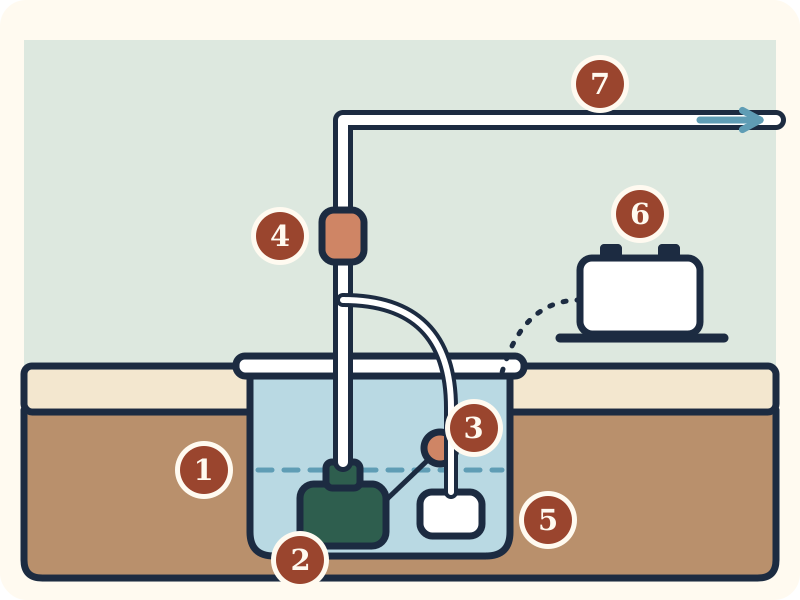
- Basin. A lined pit below floor level where drain water gathers.
- Main pump. Runs on house current and does the everyday work.
- Float switch. Rises with the water and turns the pump on, then off.
- Check valve. Stops water in the pipe from falling back into the basin.
- Backup pump. Sits a little higher and starts if the main pump cannot keep up or has no power.
- Battery. Powers the backup pump and should sound an alarm when it is in use or running low.
- Discharge pipe. Carries the water through the wall to the outside.
Signs you need a pump, or a new one
You have a drain system and nowhere for it to empty by gravity. Water rises through a floor crack or a floor drain in long wet spells. An existing pit fills to the brim and stays full.
For a pump that is already there, listen. Grinding, rattling or a hum with no water moving means the motor or impeller is failing. Starting and stopping every few seconds points to a stuck float or a check valve that has let go. A pump with no backup and no alarm is working without a net.
- Pour a bucket of water into the basin twice a year and watch the pump start, empty it and stop.
- Unplug the main pump and repeat to prove the backup.
Where the water goes
Outdoors, and far enough from the wall that it does not circle back. A pipe that ends beside the foundation pumps the same water again and again.
Ask to be shown the end of the discharge on a sketch. It should not point at a neighbor's lot, a sidewalk or a driveway. It should never be tied into a sink drain, a floor drain or a septic system. On a lot near a creek or a roadside ditch, check the Roswell drainage guide before piping water toward it.
What the installer changes in the house
For a new basin, a square of slab is cut out at the low point and a pit dug beneath it. In a crawl space the basin is set into the soil and the liner sealed around it.
The discharge pipe needs a hole through the wall or the rim of the house, then a run across the yard, often buried in a shallow trench. The pump wants its own outlet. If none is near, an electrician adds one.
Ask the installer
- What pump model is this, and why that size for my house?
- Is the backup a separate pump with its own switch, or only a battery for the main pump?
- Where exactly will the discharge end?
- Is the basin lid sealed, and can I still open it to test?
- What does the warranty cover on the pump, the battery and the labor, in writing?
Sump pump questions
How long will the backup run in a power cut?
It depends on the battery and on how often the pump has to start. Ask for the maker's figure and treat it as a ceiling, not a promise.
Can a crawl space have a sump pump?
Yes. It is common where water collects at one low corner, and it usually goes in before the liner.
My pump runs constantly, even in dry weather. Why?
A float stuck in the on position, a failed check valve letting water fall back, or a leak feeding the basin. Each can be checked in a few minutes by someone who knows pumps.
Does the pump need servicing?
Test it with a bucket, keep the basin clear of gravel and silt, and check the battery date. Makers publish their own schedules.