Crawl space
Crawl space encapsulation in Roswell
Encapsulation turns a damp, vented crawl space into a closed, dry one. The ground and walls are wrapped in a sealed liner, the vents are shut, and the air is dried by machine. Call to talk with an independent local waterproofing company about your house.
You talk with an independent local waterproofing company. Roswell Crawl Space is a referral service and does none of the work itself.
Signs that point to encapsulation
The clues are mostly upstairs. A stale, earthy smell that gets stronger in July. Hardwood boards that cup at the edges. Windows that fog and a thermostat that reads comfortable while the house feels clammy.
Under the house the picture is plainer. Ducts bead with water. Insulation hangs in strips. The joists carry gray or white fuzz, and metal straps show rust. None of this needs a flood. Humid air and bare soil are enough.
If you also find puddles or a mud line on the walls, read crawl space repair first. Liquid water needs a drain before a liner goes down.
The parts
What a sealed crawl space is made of
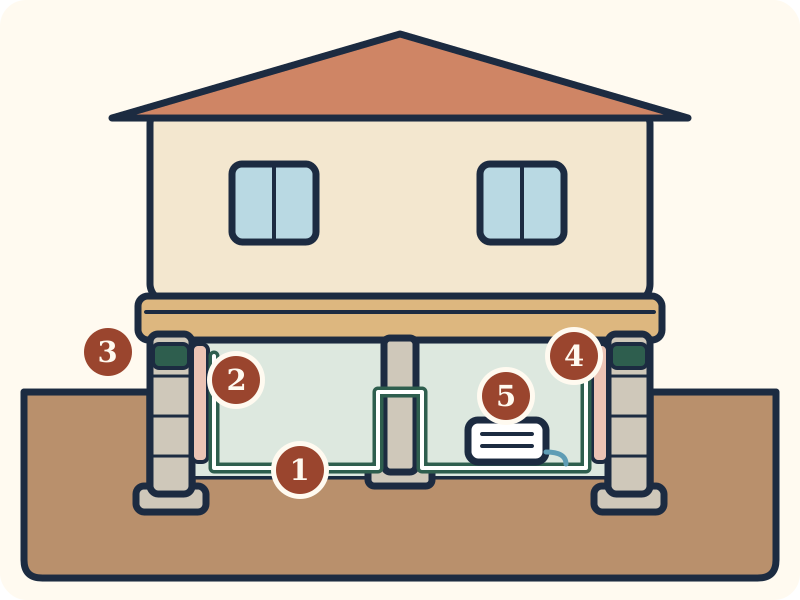
- Floor liner. Heavy reinforced plastic covers every bit of soil. Sheets overlap and the seams are taped.
- Wall and pier wrap. The liner runs up the foundation walls and around each pier, fastened and sealed at its upper edge.
- Sealed vents. Each foundation vent is closed from inside so outdoor air stops coming in.
- Wall insulation. Rigid foam on the walls replaces the batts between the joists, which are taken out.
- Dehumidifier. A unit built for crawl spaces holds the humidity down and drains its water away by hose.
Vapor barrier or full encapsulation?
Companies use both terms, sometimes loosely. Ask which one a proposal describes.
| Vapor barrier only | Full encapsulation | |
|---|---|---|
| What gets covered | The soil. Sheets overlap and the edges are often left loose. | Soil, walls and piers, with seams and edges sealed. |
| Foundation vents | Stay open. | Closed and sealed. |
| The air under the house | Still follows the weather outside. | Dried by a dehumidifier or a small feed of conditioned air. |
| Suits a house where | The only moisture comes up from the ground and summers pass without a smell. | Condensation, mold or a musty smell returns every warm season. |
Water first, liner second
A liner stops vapor. It is not a pond liner. If rain gets into the crawl space, the company should show you how that water will be caught and removed before any plastic is laid: a shallow trench along the inside of the footing, a basin and a sump pump, or a correction outside such as longer downspouts and better grading.
The order matters for mold as well. Wood that is already growing mold is usually cleaned or treated before it is closed in. Ask what the company found on the framing and what it plans to do about it.
Drying the air
How the dehumidifier does its job
Sealing the space stops new moisture arriving. The dehumidifier removes what is left and what slips in through the house above.
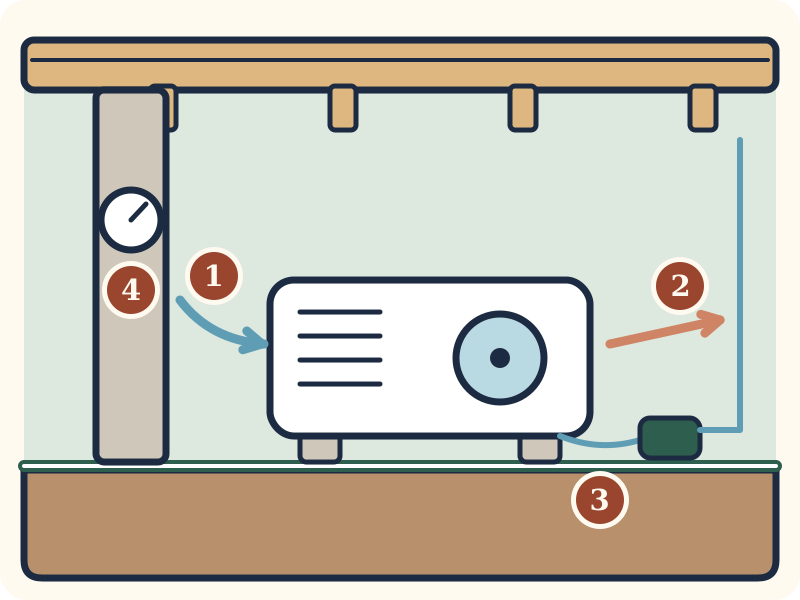
- Damp air in. A fan pulls crawl space air across a cold coil, where the water condenses.
- Dry air out. The same air leaves warmer and drier and spreads through the space.
- Drain hose. Collected water runs to a small pump or a sump basin and is sent outside. Nothing needs emptying by hand.
- Humidity gauge. A reading you can check tells you the unit is holding its set point.
What the work does to the house
Almost all of it happens below the floor. A crew goes in and out through the access door for a day or more, depending on the size and height of the space. Old insulation, loose debris and any torn plastic come out in bags. Expect some noise under your feet and a van in the driveway.
Two things reach beyond the crawl space. The dehumidifier needs a power outlet, which may mean an electrician. And the access door is usually replaced or gasketed so it closes tight.
- Clear a path to the access door and move anything stored under the house.
- Tell the company about any gas furnace or water heater in the crawl space.
- Ask where the dehumidifier water will discharge.
Questions to put to the company
Write the answers down, then ask for them in the proposal.
- How thick is the liner, in mils, and is it reinforced? Are the seams and pier wraps taped or only overlapped?
- How are the vents and the access door sealed?
- Is there a gas furnace or water heater down there? If so, where will it draw its combustion air once the vents are shut?
- Do you leave a gap at the top of the wall wrap so a termite inspector can still see the masonry?
- What happens to mold already on the joists?
- What size is the dehumidifier, what humidity will it be set to hold, and who services it?
- Does this job need a City of Roswell permit, and who applies for it?
Encapsulation questions
Will encapsulation fix floors that already sag?
It stops the damp that weakens the wood. It does not lift a floor. Sagging joists or beams are a separate repair, and a good inspection says so plainly.
Can I just close the vents myself?
Closing vents over bare, damp soil traps the moisture inside. Without a ground cover and something to dry the air, humidity can climb instead of fall.
Does a sealed crawl space need upkeep?
A little. The dehumidifier has a filter to clean and a drain to keep clear. Look in a few times a year for torn liner, pooled water or a gauge reading that has crept up.
How long does the job take?
That depends on the area, the headroom and how much has to come out first. Ask the company for its own schedule in writing and what could stretch it.
Will my energy bills change?
A dehumidifier uses electricity, and a drier house is easier to cool. Which effect is larger depends on the house. Be wary of any promised saving that is not written into the contract.